

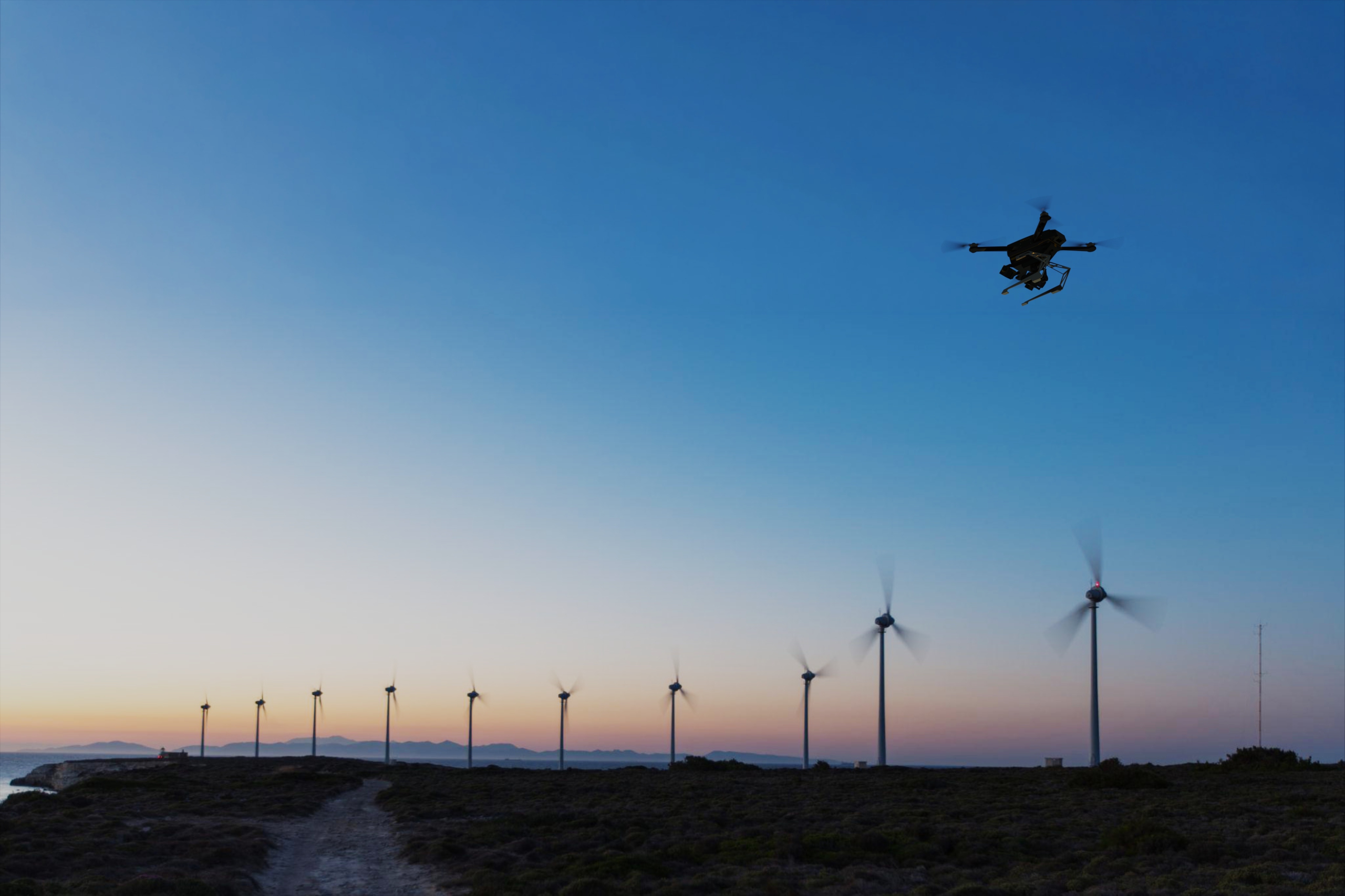
Standard multirotor drones have limitations in terms of flexibility and adaptability, which compromise their effectiveness for a wide range of missions.
In a world where technology is evolving at a breakneck pace, how can drones envision their future if these limitations persist, and how could greater modularity revolutionize current models?
While drones are revolutionizing fields such as aerial photography, industrial inspection, and rescue operations, many drone pilots are running up against the limitations of standard multirotor drones. These rigid models limit pilots’ ability to tailor their drones to the specific requirements of each mission and to adapt quickly to technological advancements. In a world where every mission may require a different configuration, how can drone pilots avoid compromises in terms of flexibility, efficiency, and cost? The answer lies in modular drones, which offerremarkableadaptabilityand unprecedented customization to meet every challenge with high performance.
- Easy Customization
Modular drones offer a major advantage by allowing users to quickly adapt the equipment to their specific needs. This enables them to easily install high-definition cameras, thermal sensors, or light-lift modules depending on the mission at hand. In contrast, a non-modular drone requires fixed configurations, limiting its use to certain specific tasks.
Any new application would then require either a complete replacement of the equipment or the use of a different, more suitable drone, which reduces the operational flexibility of a single drone.
2. Cost Reduction
One of the major advantages of modular drones is their versatility, which allows a single aircraft to meet a wide range of needs, thereby reducing overall costs. Rather than investing in multiple multirotor drones for each type of mission, a modular drone can be reconfigured simply by swapping out the necessary modules. Thus, instead of managing one drone for aerial photography, another for industrial inspection, and a third for search and rescue operations, a single modular drone can be adapted to each task by installing the appropriate modules. This versatility is particularly advantageous for professional drone pilots, who typically own at least two drones.
3. Time Savings
Thanks to their modular design, these drones allow for quick module configuration, facilitating a smooth transition between different missions. The equipment can be modified in just a few minutes, which minimizes the time spent on preparation. This efficiency allows users to focus more on carrying out missions rather than on configuration, thereby improving overall productivity.
Logistics are also simplified, as a single drone is sufficient to meet a variety of needs, thereby reducing the need for additional equipment—such as batteries, charging stations, and various accessories—that are often required for multiple devices.
4. Flexibility of Use
Adaptability is a major advantage of modular drones, allowing for maximum versatility across a variety of use cases. You can configure the drone for mapping, surveillance, or photography missions based on specific needs simply by swapping out modules—unlike standard drones, which are limited to predefined applications. This rigidity limits their ability to evolve and adapt to varied needs. However, they can deliver exceptional performance for the specific tasks for which they were designed, taking full advantage of their specialization.
5. Continuous Improvement
The modular design of drones allows them to remain at the forefront of innovation by making it possible to update or upgrade individual modules without replacing the entire device. This approach makes it possible to integrate the latest technologies quickly and cost-effectively. In contrast, basic drones can quickly become obsolete, since any technological upgrade requires the purchase of an entirely new model.
6. Weight Reduction
By allowing the use of only the modules needed for each mission, the drones’ modular design optimizes the aircraft’s weight. This ability to tailor the payload to specific needs significantly improves performance and efficiency.
Traditional drones, which feature fixed components integrated into a single structure, have excess weight that can compromise flight time and maneuverability, thereby limiting their overall performance and flexibility for a variety of missions.
Continuous improvement and weight reduction, combined with simplified logistics, make modular drones an attractive option for a variety of use cases, whether for mapping, surveillance, or photography. Their ability to adapt quickly and evolve to meet specific needs helps optimize resources and increase productivity.
Non-modular drones impose limitations that can hinder innovation and increase operating costs, although they also offer their own advantages.
As drone technology continues to evolve, it is likely that new advances and innovations will further enhance the capabilities of modular drones. It is therefore essential to stay attuned to market developments in order to take full advantage of the opportunities offered by this dynamic technology. In this ever-changing landscape, modular drones could well shape the future of aviation, offering solutions that are increasingly tailored to emerging challenges.
Hellyos
Leave a comment